Great interactive infographic from the Google folks…
Writing
What Percentage of PageRank is Lost Through a 301 Redirect?
Matt Cutts has some helpful comments on the ongoing tension between PageRank and 301’s…
As always, 301 redirects should only be used when you are switching sites permanently and forever!
Nexus 4 and Porting My Number to Google Voice

Like a number of others, I couldn’t wait to get a Nexus 4.
As a recent Android convert, I have been jealous of those with stock Android installs on their mobiles. My Samsung Galaxy S3 looks and acts mored like a Samsung phone than a “Google phone,” and rightly so. Samsung is making those devices so that’s their decision. Of course, there are ways to root and flash mods to get a more streamlined and stock Android experience, but as someone fresh from the Apple orchard, I was hoping for a little more ease.
The Nexus 4 is also an unlocked phone. That means I can sign-up with TMobile or ATT here in the US and pop in a sim card without a worry for carrier fees or a 2 year contract.
That’s a scary proposition for most folks. I’d make the correlation between deciding to “cut the cord” with your cable tv and go the route of using an AppleTV or Roku or a laptop or Mac Mini or XBox or PS3 etc as the main source of your entertainment. I “cut the cord” back in 2003 and haven’t looked back. I’ve loved the freedom of using an AppleTV for some content, my beloved Roku for other content, an XBox 360 for some things and finally a laptop with an HDMI connection. I have a state-of-the-art huge TV and it feels right to me (and simpler) to use those boxes to get the shows I want to watch.
The same goes with cutting a connection to a mobile phone carrier. As an experiment with this new Nexus 4, I signed up for a $30 a month pre-paid TMobile 4G plan. I can ramp that up or down as needed. I can go grab an ATT account if I want. There’s no commitment and that’s awesome. I rarely “talk” on my phone so 100 mins for me are probably too many. However, the unlimited texting and unlimited browsing (4G speeds up to first 5 gigs) are the real winners for me. There are more expensive plans, of course. I’m assuming most people need more than 100 minutes of talk time for their phones. However, with Google Voice on my laptops and Skype, I don’t do much in the way of using a phone as a phone.
That takes me to the final part of this transformation… porting my number over to Google Voice. With a $30 a month plan in place that I’m really enjoying, I’ve decided to take the plunge and get away from my Verizon account by porting my number over to Google Voice and using that as my main telephony.
I love Google Voice and have been a long-time user of the service since it was called GrandCentral back in 2005 and not affiliated with Google. When Google did acquire the service in 2007 I was hopeful about it’s future and how Google could reinvent texting and telephony just as it changed email forever with GMail.
It has been a slow progression, but as a steady Google Voice user over the years I’ve been waiting for the right set of circumstances to make the leap to using the service as my full time provider (in a sense) rather than just the extra number that some of my closest friends have.
With this awesome T-Mobile plan, an amazing Nexus 4 device that I’m literally head-over-heels about and the always-there passion to cut the cord to Verizon, now’s the time.
I just started the porting process and will keep updating on how things go.
Setting Fire to the Past
Despicable:
Ancient Manuscripts In Timbuktu Reduced To Ashes : The Two-Way : NPR: “‘These priceless manuscripts are my identity, they’re my history. They are documents about Islam, history, geography, botany, poetry. They are close to my heart and they belong to the whole world,’ the mayor said.”
Fundamentalists in Mali aren’t the first or the last to commit such atrocities, of course. Europeans have a long history of setting fire to their respective pasts as do Greeks, Romans, Egyptians, Persians, Seleucids, Assyrians, Babylonians, and Sumerians before them.
We set fire to the past when we speak of “the Founding Fathers” or “Biblical veracity” everyday.
Still… “The past is never dead. It’s not even past,” as Faulkner reminds us.
“I Didn’t Know There Was Another Type of Phone”

My five year old daughter saw my Galaxy S3 on the kitchen table this afternoon and asked:
“Daddy, what is that?”
“It’s a mobile, why?”
“It’s not an iPhone?”
“Nope, here’s my iPhone.”
“Oh, I thought all phones were iPhones.”
I keep forgetting that she was born in the same year the first iPhone was announced and then released.
Start Your Own School with a WordPress Plugin
Really exciting to see this type of thing develop (especially from the fine folks at WooThemes using the venerable WordPress platform):
Sensei from WooThemes: “Google is working on an online course solution. Same story with Khan Academy, Coursera, Udacity, and … you? If you run a website that uses WordPress, you can now easily (relatively) build your very own online school.”
via edudemic
We’re in for a major sea change that has to be scary not just to independent education outlets but also colleges and universities that “get it” when it comes to what’s around the corner.
That’s why Harvard, Yale, Stanford, MIT etc are working so hard to secure their footholds in this brave new world of education and learning. Sadly, k-12 independent schools aren’t seeing the light just yet.
Shake and Fold
One of Those Nights

Microsites and SEO
Microsites can still be powerful additions to your business’ web presence.
However, they can also cause you some serious headaches down the road if implemented incorrectly in 2013 (Google is an evolving beast).
Rand’s video from 2009 still rings true:
SEOmoz Whiteboard Friday – The Microsite Mistake from SEOmoz on Vimeo.
Additionally, go read his description of “subfolders” vs “subdomains” for more info on the topic.
We’ve done a great deal of work with clients on microsites over the years and are always astounded when people within the SEO industry confuse the subject to the point of actually hurting a client’s optimization. Always do your homework and always make sure to ask lots of questions about implementations and long-term strategies.
Class Development and Management
How would this work in a classroom (or even faculty meeting)?
What is Amazon’s approach to product development and product management? – Quora: “It’s not uncommon to attend meetings at Amazon that begin with everybody sitting in silence for the first 5-10 minutes reading a document.”
Pretty well, I imagine.
Getting things done is all about culture.
Intro to WordPress
Nice 93 slide presentation from our pal Tris Hussey on the topic of websites and WordPress…
Textbooks Are Obstacles to Learning
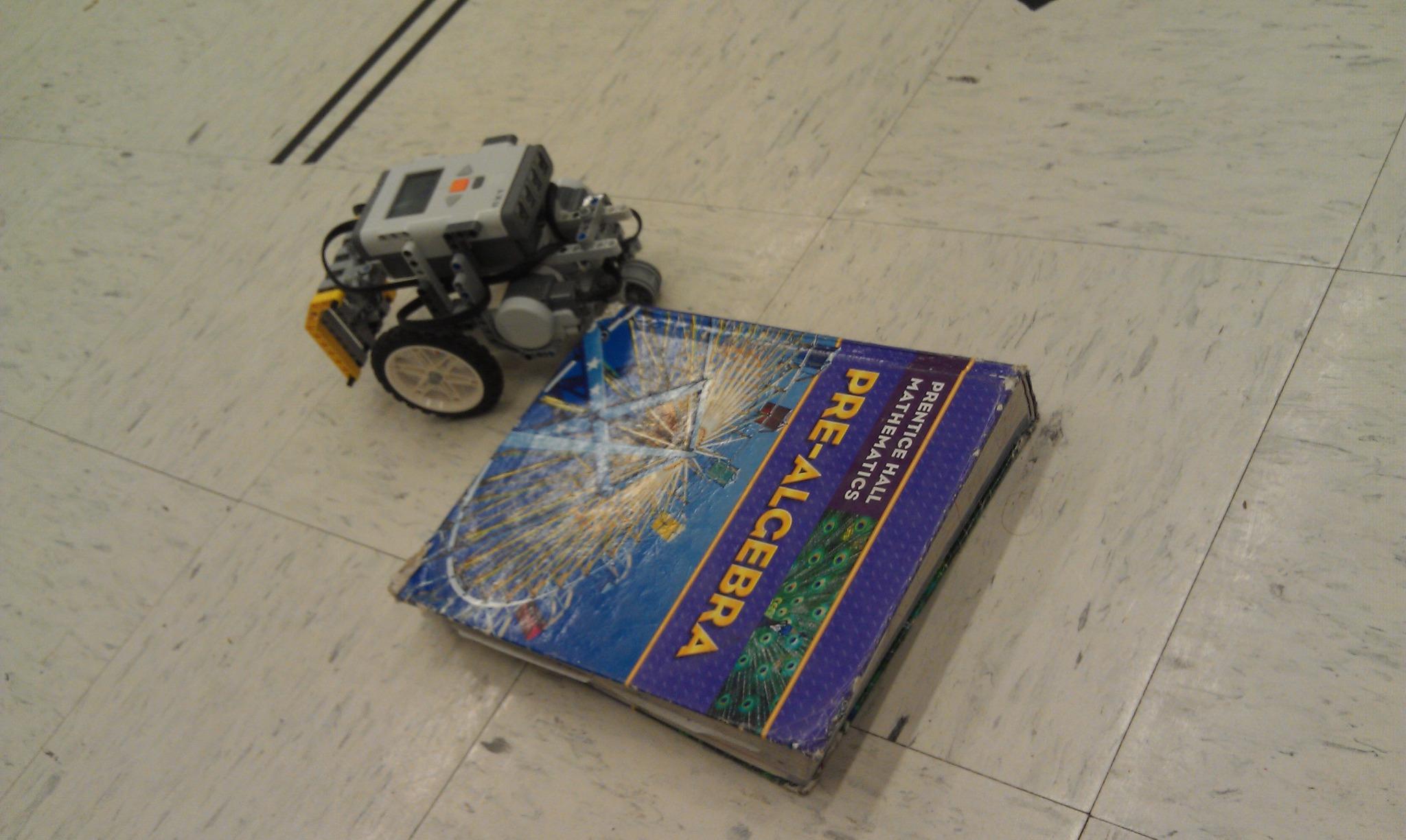
From one of my bosses (and an awesome person) @John_S_Douglas:
Are textbooks standing in the way of success? twitter.com/John_S_Douglas…
— John Douglas (@John_S_Douglas) January 14, 2013
//platform.twitter.com/widgets.js
Tomorrow are the finals 🙂
Remembering Danny Goodman: Four Years Is Too Long
I miss you everyday, Prof Goodman.
Victory is sweet, even deep in the cheap seats…
Here’s how he described me four years ago just before his death:
“Fun guy, smart guy, obsessed with techno gadgets, a little overbearing in Trivial Pursuit, good taste in music (early REM), bad taste in music (early Glen Campbell), reads too many blogs, writes too many blogs, dresses snappy, beautiful family, loves history, hates theology, and likely running from his true calling to be an evangelist.”
He still haunts me daily with that description.
Thank you, Danny.
Should Cursive Be Replaced by Typing Education?
I’m terrible at writing in cursive. I was in the hospital for a chunk of time during first and second grades when my public school taught the majority of cursive writing techniques (I’ll never forget the worksheets I had to do). Luckily, it didn’t hold me back much.
I understand the “kinesthetic benefits” of learning with cursive, however I do wonder…
Great comments and discussion on this Ask Reddit thread about cursive education:
AskReddit: “Do you think that cursive writing education should be replaced by typing education for 1-2nd graders?”
Remembering Aaron Swartz
Great piece from a mainstream publication about an open web hero:
Why We Should Remember Aaron Swartz – Businessweek: “Swartz wasn’t an anarchist. He came to believe that copyright law had been abused, and was being used to close off what, by law, should be open. It is hard to find fault with his logic, and there is much to admire in a man who, rather than become a small god of the valley, was willing to court punishment to prove a point. The world will have no trouble remembering Steve Jobs and Mark Zuckerberg, and this is as it should be. But it should remember, too, people like Aaron Swartz, the ones who make those empires possible.”
How Gorillas Got Their Name
Learn something every day…
Gorilla – Wikipedia: “The American physician and missionary Thomas Staughton Savage and naturalist Jeffries Wyman first described the western gorilla (they called it Troglodytes gorilla) in 1847 from specimens obtained in Liberia. The name was derived from Greek Γόριλλαι (Gorillai), meaning ‘tribe of hairy women’, described by Hanno the Navigator, a Carthaginian navigator and possible visitor (circa 480 BC) to the area that later became Sierra Leone.”
Hanno was a fascinating person (as were many Carthaginians).
There’s even a crater on the moon named after him.
Here’s the source that started my Sunday afternoon rat-hole into the life of Hanno…
A History of Ancient Geography Among the Greeks and Romans: From the Earliest Ages Till the Fall of the Roman Empire, Volume 1 (on Google Books for free).
Aaron Swartz on “Digging In and Fighting Harder”
Such grand thoughts by a passionate person who has been taken from us…
Look at yourself objectively (Aaron Swartz’s Raw Thought): “In moments of great emotional stress, we revert to our worst habits: we dig in and fight harder. The real trick is not to get better at fighting — it’s to get better at stopping ourselves: at taking a deep breath, calming down, and letting our better natures take over from our worst instincts.”
Happy 30th Birthday to the Internet
Vint Cerf writes a great post about how the modern-day internet (no, not Facebook and Twitter and TMZ.com) came to be during a tumultuous switchover in 1983:
Marking the birth of the modern-day Internet | Official Google Blog: “In an attempt to solve this, Robert Kahn and I developed a new computer communication protocol designed specifically to support connection among different packet-switched networks. We called it TCP, short for ‘Transmission Control Protocol,’ and in 1974 we published a paper about it in IEEE Transactions on Communications: ‘A Protocol for Packet Network Intercommunication.’ Later, to better handle the transmission of real-time data, including voice, we split TCP into two parts, one of which we called ‘Internet Protocol,’ or IP for short. The two protocols combined were nicknamed TCP/IP.”
1996 Wilco
Forget Ryan Seacrest, this is a great listen to ring in 2013 (especially Box Full of Letters starting around min 24):
AirDroid and Update On My Android Experiment
Despite my frustrations over a lack of a TweetBot style app for Android, my current experiment with Android via a Galaxy S3 has been going pretty well.
I’ve had an iPhone since 2007 and constantly turned my nose up at Android all the while hoping that the platform could mature into an iOS rival that would fulfill my wishes for a more “open” and dare-I-say geeky user experience with a portable computer (or phone). That same wish makes me keep a copy of Debian installed along side my 15″ Retina Macbook Pro in hopes that one day Linux will find the right balance for me.
Apps like SwiftKey (and their insanely amazing new Flow app) make me realize why I started loving computers in the first place. The ability to tinker and get my hands dirty in (sometimes useless but nevertheless enjoyable) settings toggles.
Android isn’t for everyone. iOS is a cleaner and more user friendly operating environment. Things are prettier in Apple’s garden of eden, for sure. However, I like to tinker. I like to break things and have to figure out where I went wrong. To put it in middle school teacher language, I like to have the ability to tinker without voiding a warranty.
AirDroid is yet another example of why I’m liking Android these days:
AirDroid: The free app every Android owner should install in 2013 — Mobile Technology News: “Once connected, the computer browser shows a desktop-like interface to the Android smartphone or tablet. There are numerous icons for different activities and data: Files opens up a file manager for the phone, for example. Music, Videos, Messages and Call Logs all show their respective Android data as well. Or, if your device is rooted, you can click the Screenshot icon to snap an image of the Android device remotely.”
Imagine doing something like that with an iPhone. True, most people wouldn’t want to, and there’s no real reason to given iTunes, iCloud etc. However, rather than my data traveling over wires to Maiden, NC where iCloud lives, I feel like I have the permission to DIY if I want to try.
I’m really impressed with Android in 2012. I’m hoping 2013 brings even more enjoyment.
As Cory Doctorow wrote in his 2011 piece “Android and iOS both fail, but Android fails better”:
I prefer Android because it’s relative openness means more people can and do inspect its workings to ensure it is doing what Google claims it is doing. I prefer Android because when Google decides to leave out a feature that users might want – such as tethering – the people making alternative OSes for the platform stick that feature in, and shame Google into adding it in subsequent versions.
My mobile phone can track where I go. It can record my voice and image, and the voices and images of those around me. It can leak email, voicemail, texts, and passwords. In the time since I’ve gotten a mobile phone, each passing year has meant that I rely on my phone for more things, and I don’t expect that will change.
Android and iOS will both fail their users in the years to come. Not a lot, but often enough, and dramatically enough, that it’s worth ensuring that those failures are as minimal as possible.
That’s exactly how I’m feeling lately. I still love and use my iPhone 5. It is a much better experience than my Galaxy S3 when I want a stock, smooth, out-of-the-box experience.
Trouble is (as I’ve figured out after 34 go-rounds the sun), I normally don’t want that type of an experience in the long run.